
There is a special kind of tranquility inside the cockpit of our fixed-wing Cessna as we make our way towards the Rose Bowl Stadium for our annual New Year's Day flight. We've been planning and visualizing for a few weeks, and now all that is left is to hope everything comes together as we've planned. As we climb thousands of feet in the air above Southern California, above the rugged foothills of the San Gabriel Mountains, we pass by Glendale and see the Rose Bowl Stadium nestled in the natural amphitheater of Pasadena's Arroyo Seco. On January 2, 2012, this usually quiet valley became the focal point of college football's most exciting game of the year, as the University of Oregon Ducks secured their first victory in 95 years at the 98th Rose Bowl Game. From up above, we set out to document the pre-game marching band formations and the B-2 Stealth Bomber flyover.
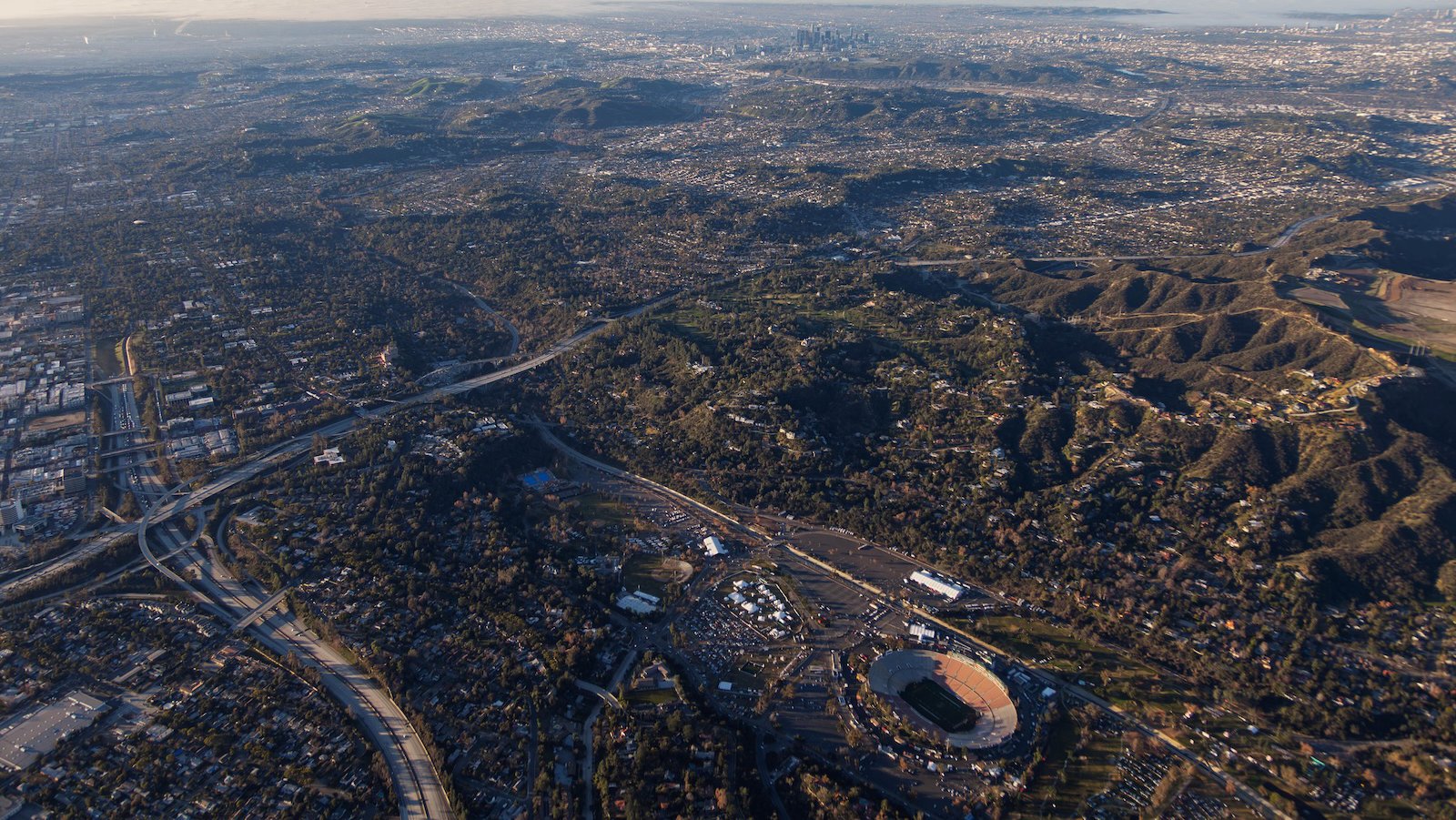
Wide aerial view showing the Rose Bowl Stadium within the Arroyo Seco canyon, with Downtown Los Angeles visibile in the background
Pasadena’s Arroyo Seco from Above
Looking out the window, as the fans began to find their way into the Rose Bowl, the stadium transformed into a living, pulsating mosaic of color. A sold-out crowd of over 90,000 spectators started to pack in, slowly creating a stark visual divide between the vibrant cardinal red of Wisconsin and the bright forest green and yellow of Oregon. We watched as thousands streamed through the turnstiles and toward their seats, filling the stadium until there was only red, yellow and green in the stands.
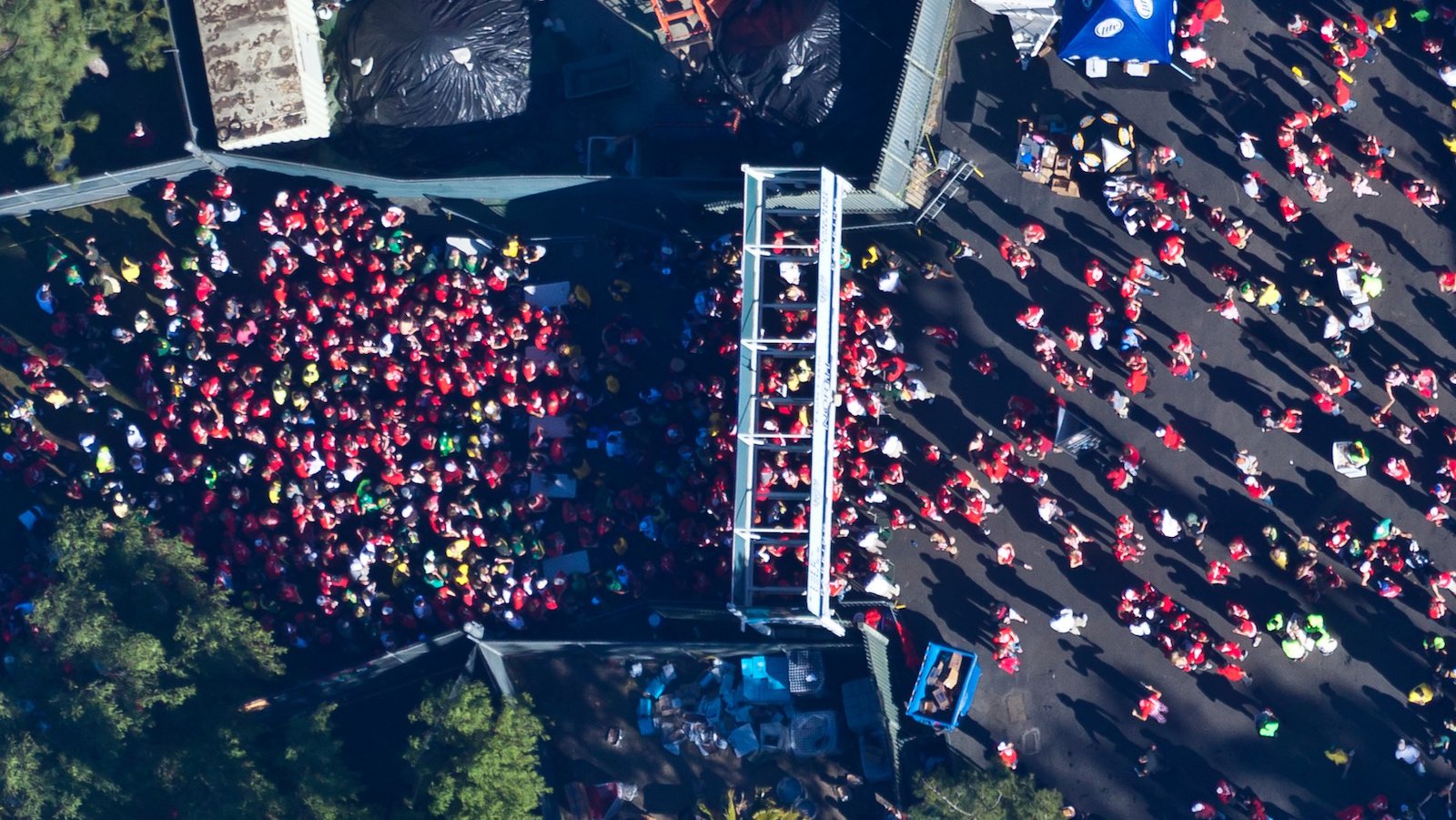
A sea of red as Wisconsin fans gather outside the stadium turnstiles before making their way inside to watch the kickoff at the 98th Rose Bowl Game
Adding a fun twist to our flight, we found ourselves sharing the sky and getting "photobombed" by the Farmers Insurance Blimp hovering near the stadium. While football fans are accustomed to seeing the iconic Goodyear Blimp floating over the game, the Farmers airship took center stage in the sky that afternoon.
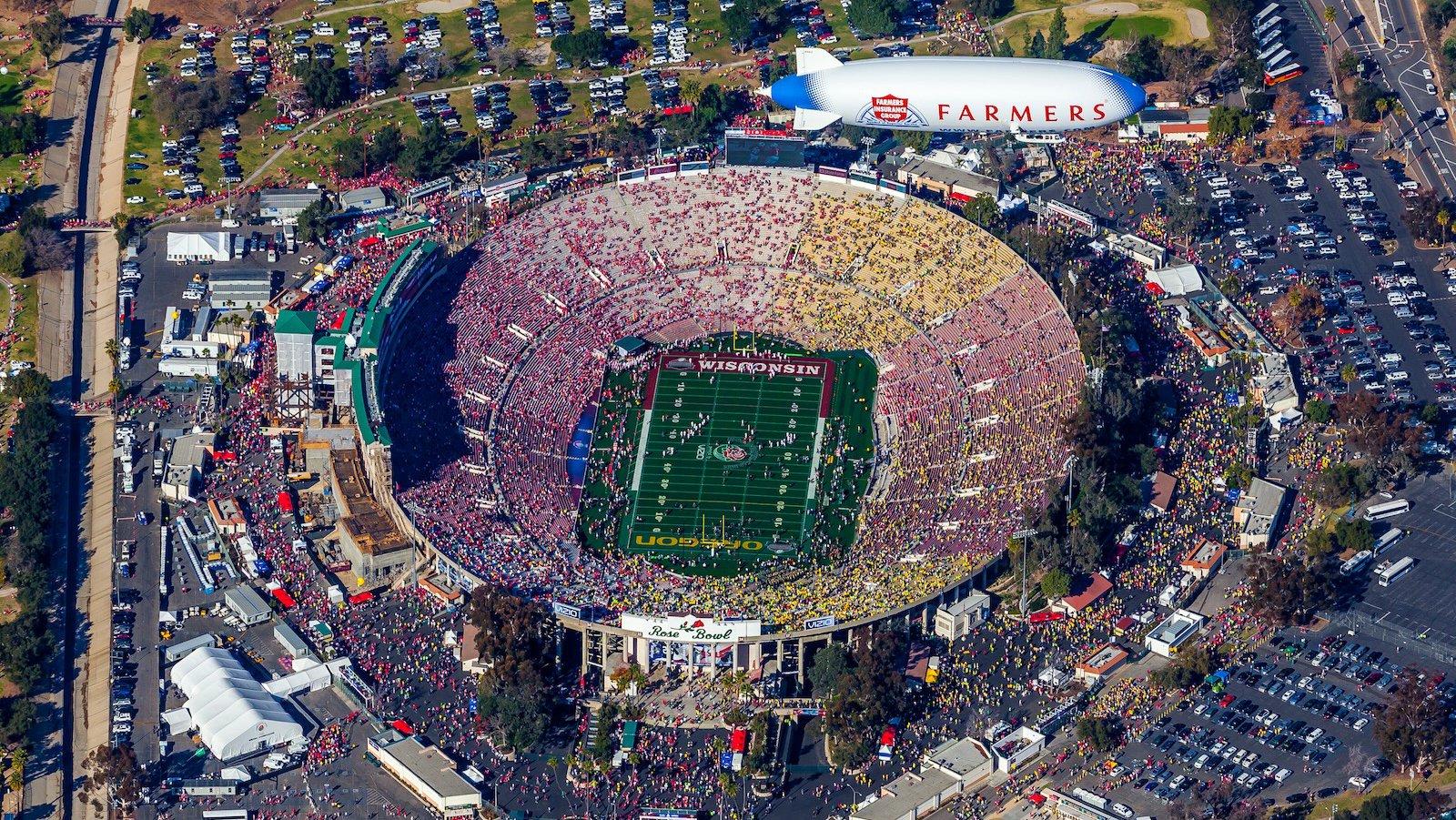
The Farmers Insurance blimp floats above the Rose Bowl Stadium in Pasadena, California.
Capturing the B-2 Spirit
When you are tracking a stealth bomber from an airplane, just seeing the B-2 coming is a challenge in itself. Engineered to slip past radar, its flat, dark, flying-wing design makes it surprisingly difficult to spot until it is almost right on top of the stadium, even if you know where and when it is coming. Capturing a B-2 flyover requires balancing our position with the position of the stadium and where we hope the B-2 will be, since once it is spotted, there isn't any time to make adjustments. The entire flyover happens in a few heart-stopping seconds, so planning and preparation are key, but as with anything, so is having a little luck.
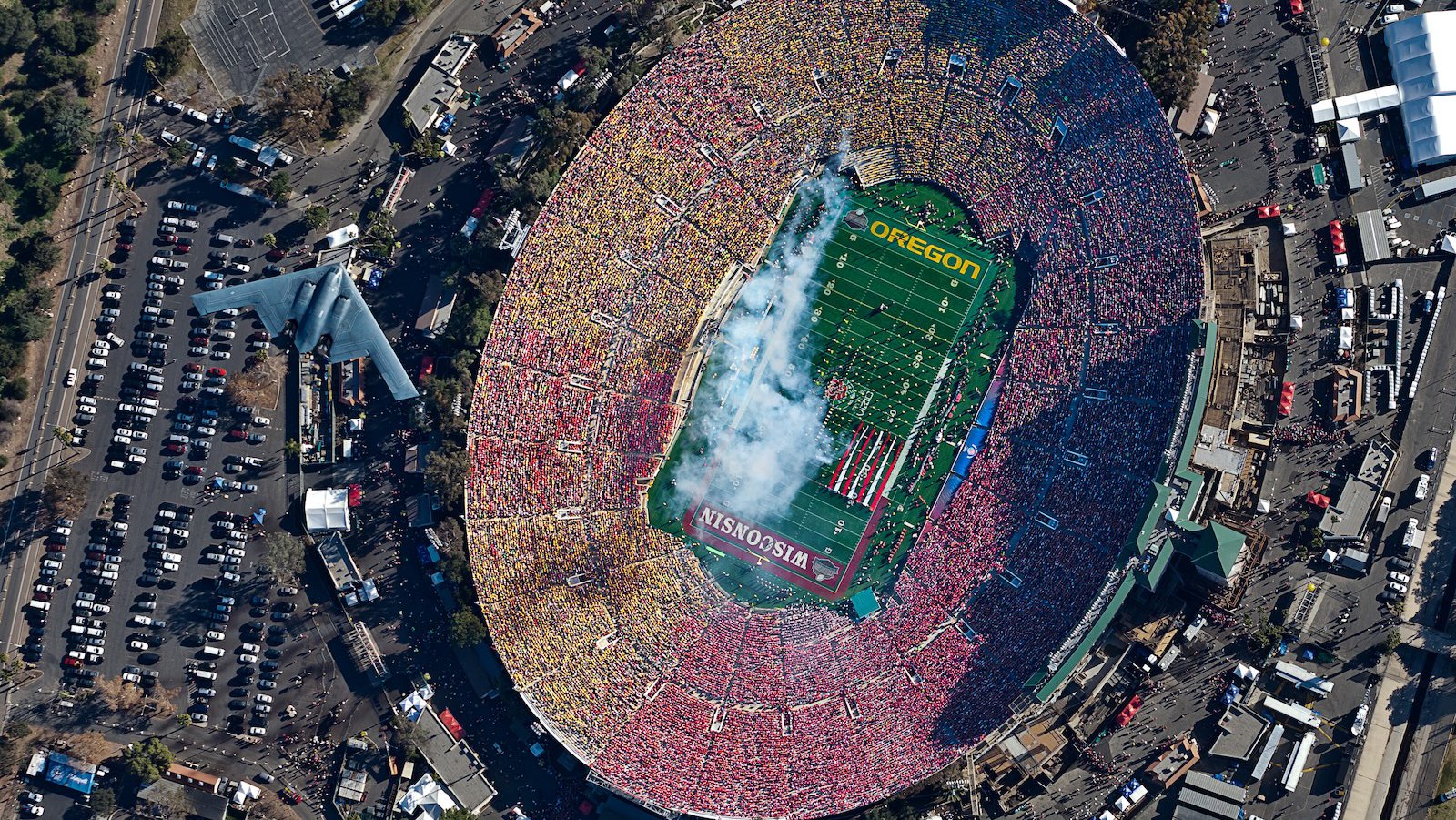
The B-2 Spirit Stealth Bomber flies over the Rose Bowl Stadium at the 2012 Rose Bowl Game as smoke lingers on the field at the conclusion of the National Anthem.
In order to capture the B-2 within the stadium, our photo ship, the Rose Bowl, and the B-2 Spirit must be in the right relative position at the right moment. If our or the B-2's position is off, even by a little bit, the B-2 will appear just outside the frame of the stadium. As the national anthem ended and the firework smoke drifted across the field, we spotted the B-2's dark shape over the golf course, en-route to the stadium, telling us that we had no more time to adjust our position. Now we just had to hope we were all in the right position at the right time to capture the image we had in mind.
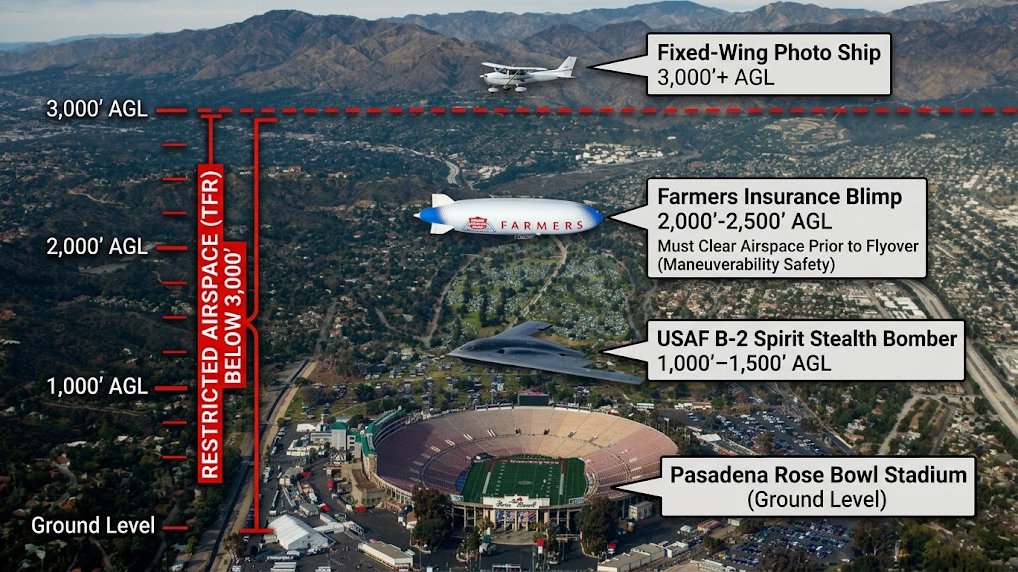
Navigating Restricted Airspaces
Executing a complex mission like a B-2 flyover shows why manned, fixed-wing aircraft remain essential in the age of UAVs. For the safety of both pilots and the fans on the ground, the FAA enforces strict Temporary Flight Restrictions (TFRs) over the stadium. Drones and unmanned UAVs are prohibited by the FAA from operating near these events and cannot legally fly above a military B-2 flyover. With our manned, fixed-wing photo ship, alongside preapprovals by FAA and local law enforcement, and a high-altitude position, we can safely capture both the B-2 aircraft and the entire surrounding landscape.
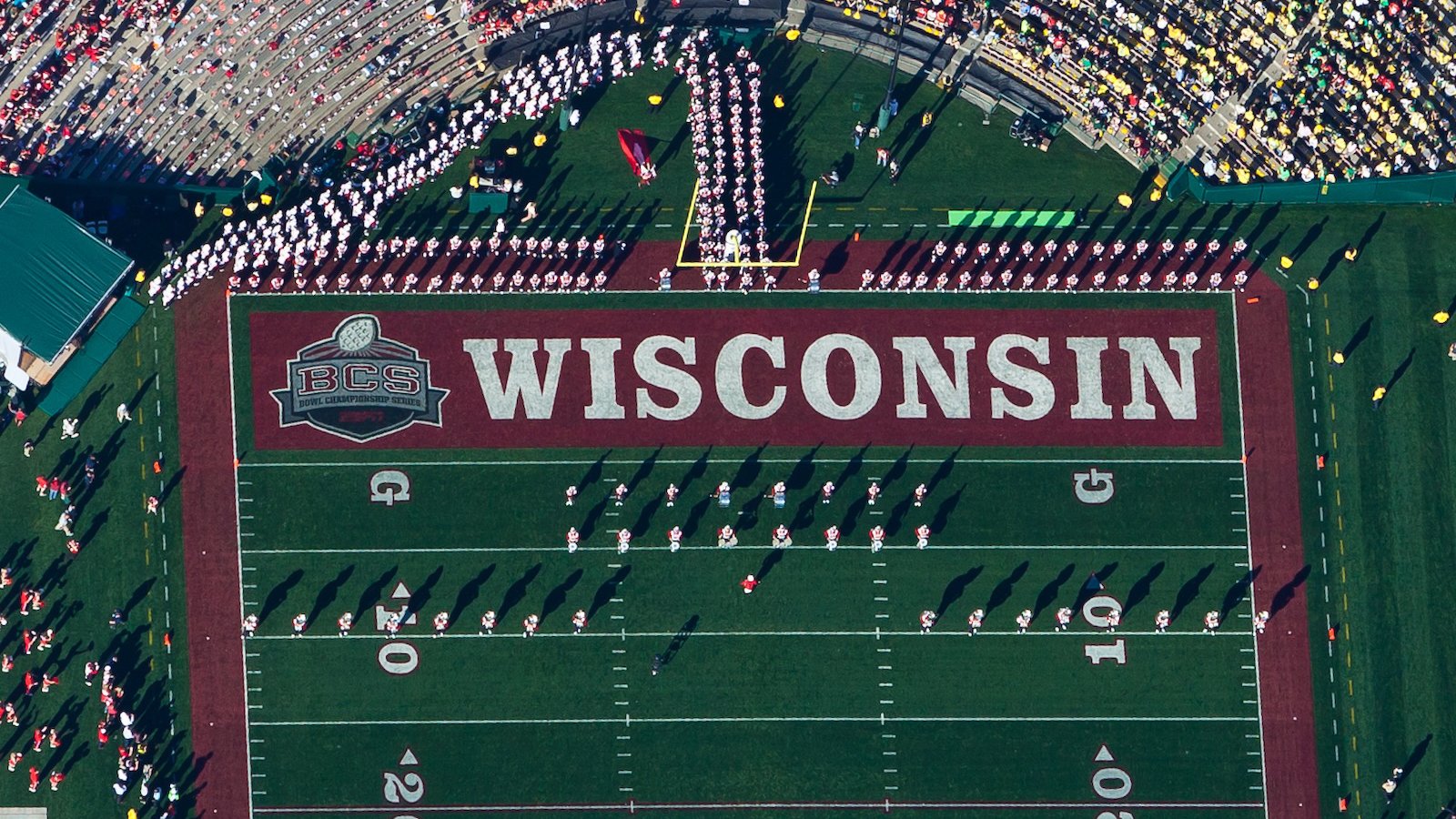
The Wisconsin Marching Band snakes out onto the field in tight lines, ready to wow the crowd with their formations.
Marching Band Formations from 3,000+ Feet
From several thousand feet in the air, the pre-game performances take on an elegance that spectators in the stands simply cannot see. Before the football teams took the field, the marching bands turned the turf into a giant canvas, painting various messages and images with the highly coordinated movements of the marching band members.
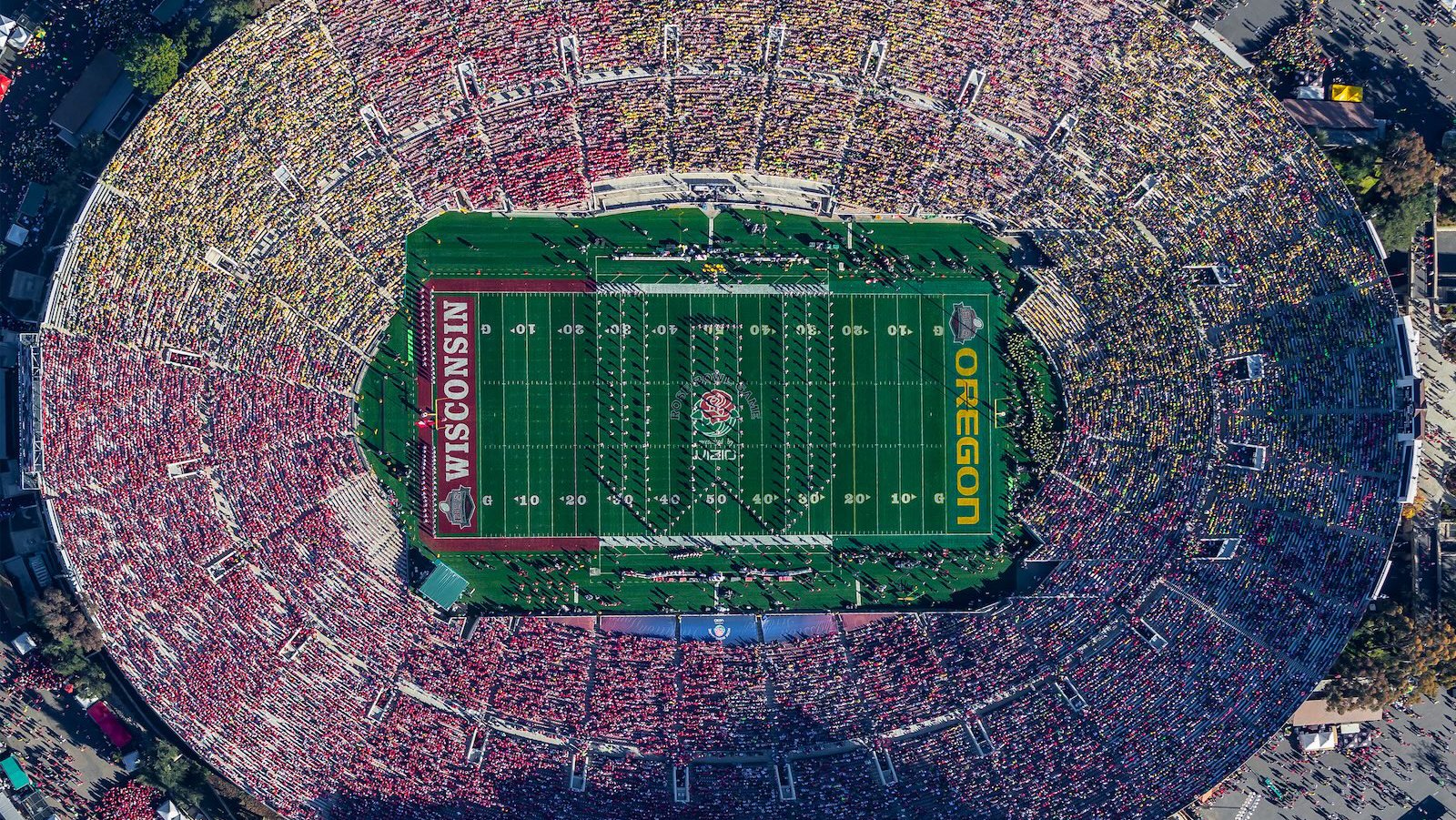
The Wisconsin Marching Band spread across the field at the Rose Bowl Stadium to form their iconic block "W"
The Wisconsin Marching Band stepped out in immaculate linear rows before fanning out to craft their bold, iconic block "W" stretching across the field. Shortly after, the Oregon Marching Band marched onto the field and seamlessly formed a massive, Duck mascot centered around the Rose Bowl logo.
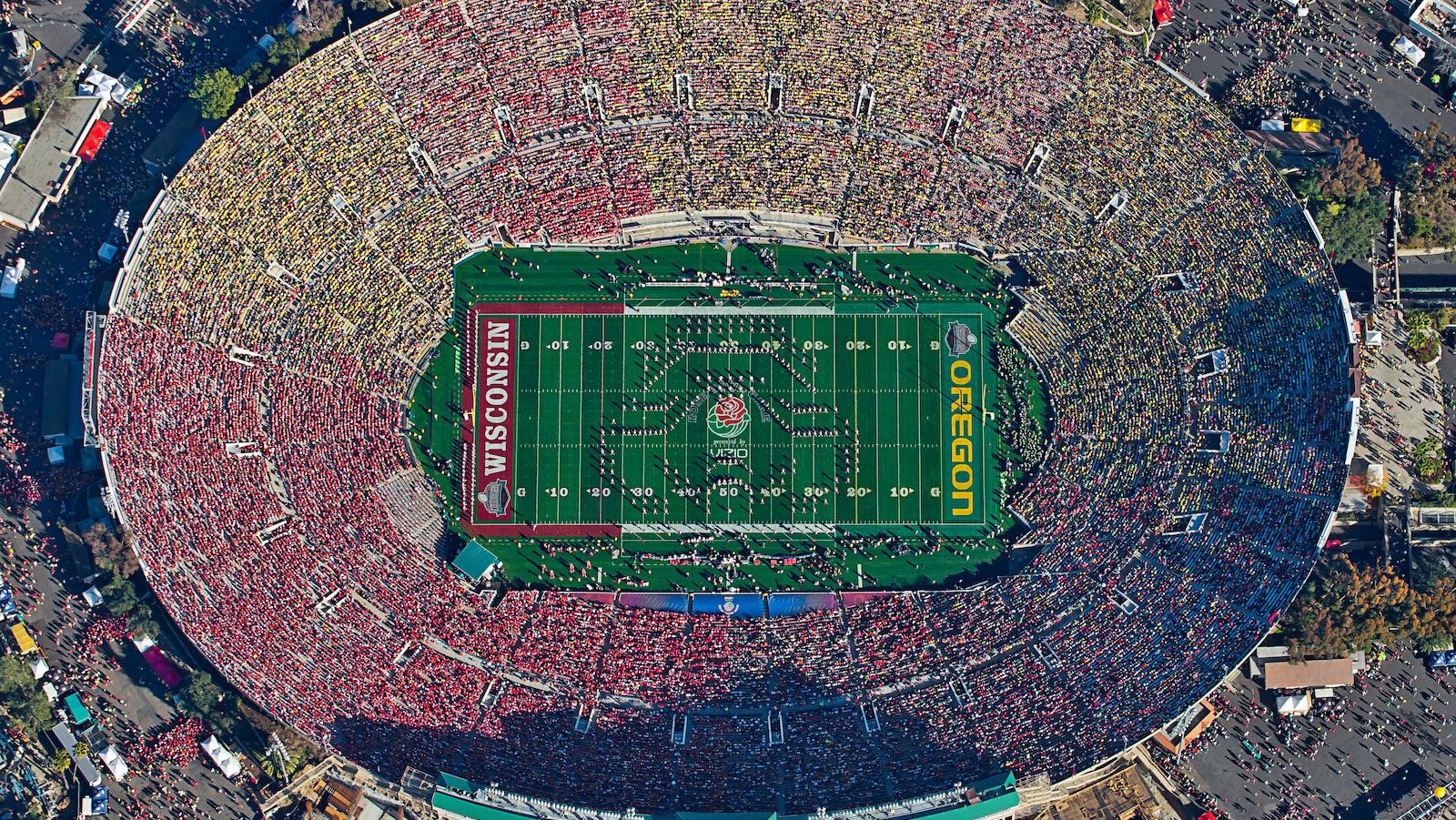
From thousands of feet above, the intricate choreography of the Oregon Marching Band transforms the individual band members into a colossal Duck on the field.
Capturing a Moment in Time
Beyond the adrenaline of the flyover, aerial photography serves as a permanent historical archive of California's various rich traditions. The 2012 Rose Bowl, the 98th edition of the "Granddaddy of Them All", played on Monday, January 2, 2012, is no exception. It proved to be an instant classic with the Oregon Ducks coming from behind to defeat the Wisconsin Badgers 45-38, securing Oregon's first Rose Bowl victory in 95 years. Capturing that historic afternoon from the sky preserved a moment in time for generations of fans and aviation lovers alike.
See more photos here.