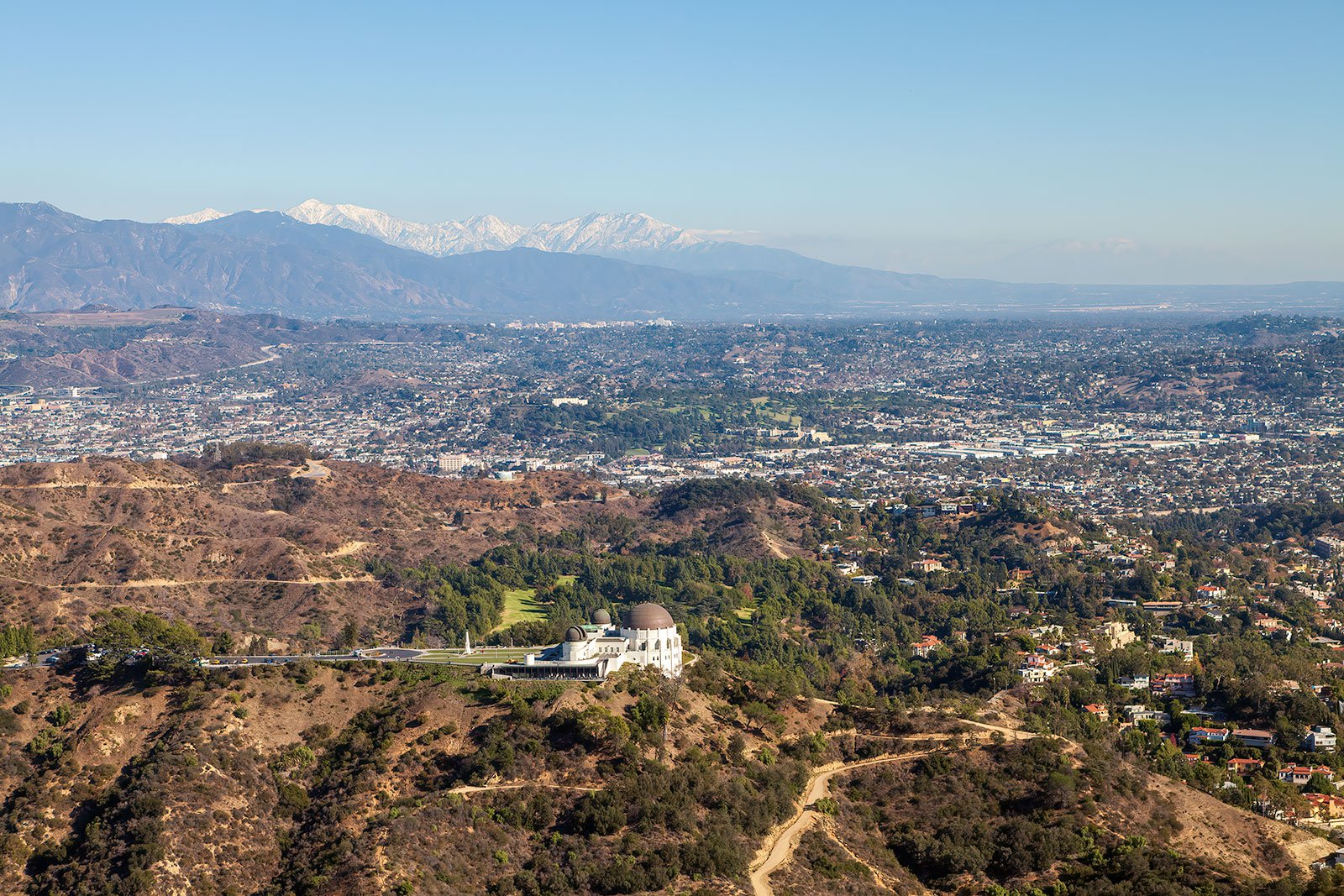
Located in the heart of Griffith Park, the Griffith Observatory is a cherished Los Angeles landmark that has captivated visitors since its opening in 1935. Offering spectacular panoramic views of the Los Angeles skyline, including Downtown LA, the Pacific Ocean, and the iconic Hollywood Sign, this historic observatory combines stunning architecture with engaging astronomy and space science exhibits. As a hub for public astronomy, the Griffith Observatory invites visitors to explore exhibits, gaze through its famous telescopes, and enjoy immersive planetarium shows, making it a must-visit destination for both locals and tourists eager to connect with the cosmos.
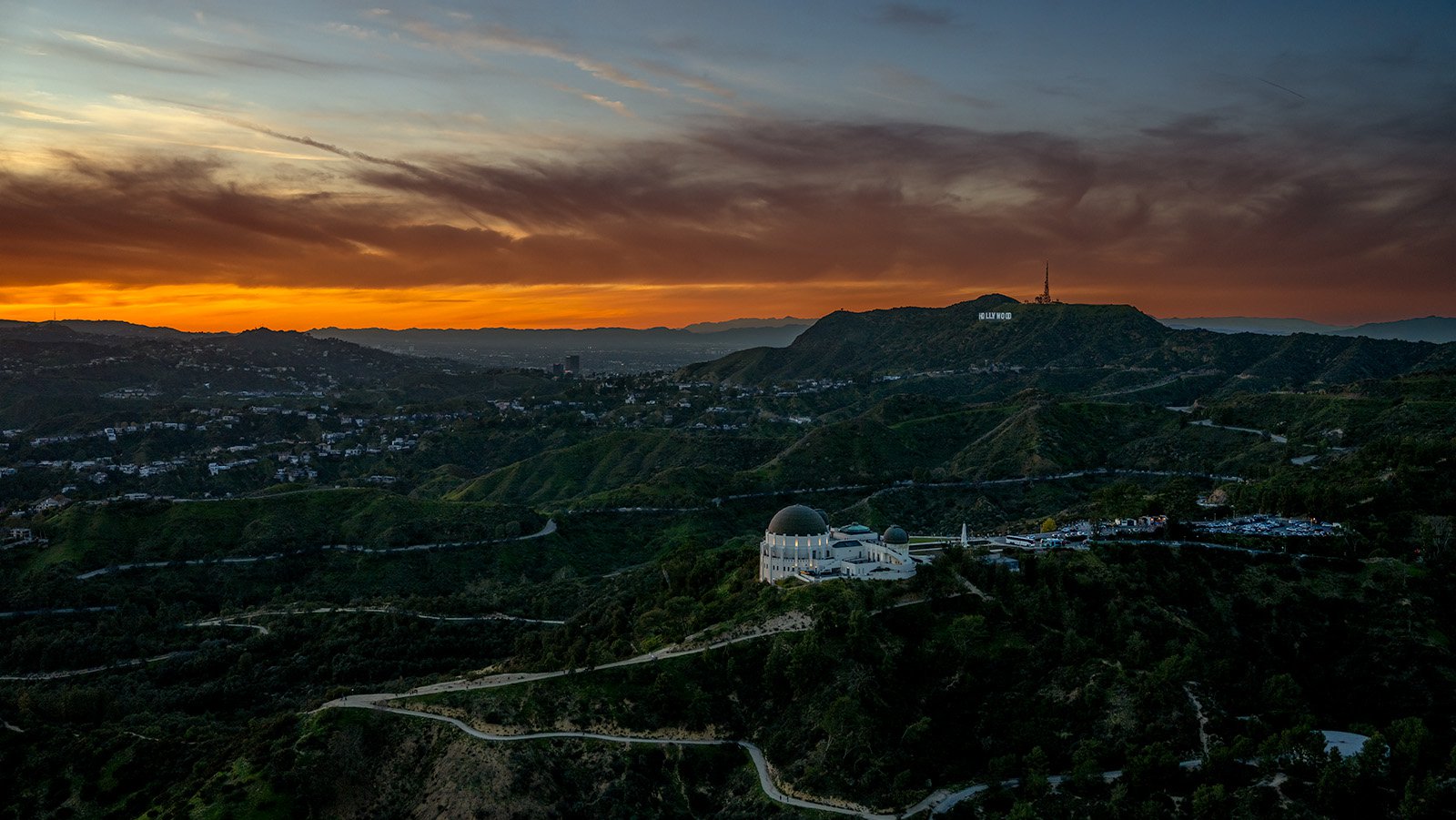
Griffith Observatory, an Art Deco landmark dating back to 1935, nestled within Los Angeles' Griffith Park, with views of the Hollywood Sign atop Mount Hollywood and a dazzling sunset sky.
The History of the Griffith Observatory
Griffith Observatory, a beloved Los Angeles landmark, was made possible by the philanthropy of Griffith J. Griffith, who in December 1896 donated 3,015 acres of land surrounding Mount Hollywood to the City of Los Angeles, creating what is now Griffith Park. His vision was to make astronomy accessible to the public, a mission that guided the establishment of the observatory. Construction began in 1933, following detailed plans developed with input from prominent astronomers and architects, and the observatory officially opened on May 14, 1935. It featured the now-famous 12-inch Zeiss refracting telescope, which remains one of the most viewed telescopes in the world.
During World War II and the Apollo program, the observatory played a vital role in training pilots and astronauts in celestial navigation, further cementing its importance in astronomy and space science education. Beyond its scientific offerings, Griffith Observatory has become a cultural icon, serving as a popular filming location in legendary movies such as Rebel Without a Cause (1955) and La La Land (2016). This blend of educational exhibits, breathtaking views, and engaging public programs makes Griffith Observatory a premier destination for anyone eager to explore the universe and the history of astronomy.
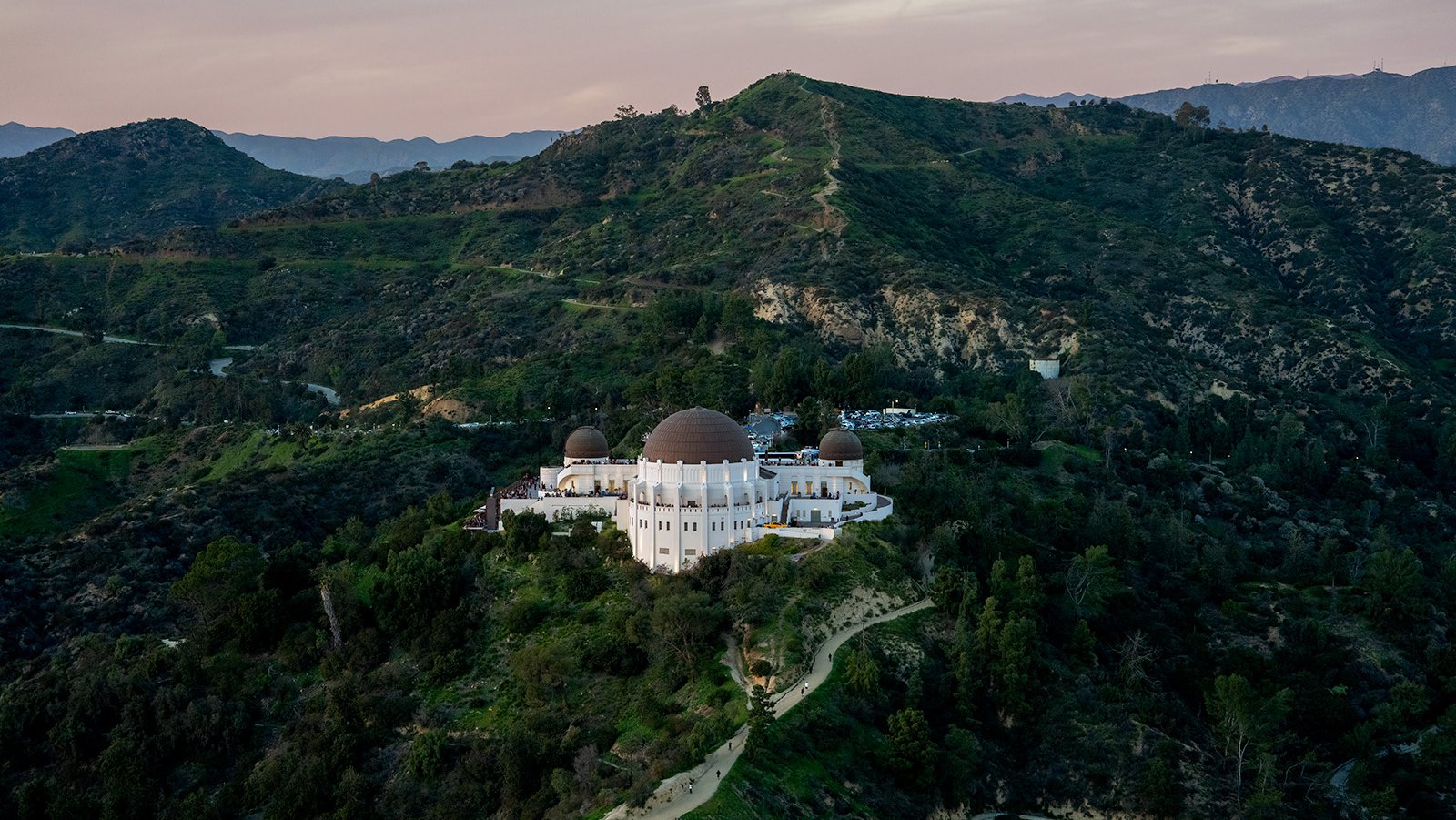
Aerial photograph of the Griffith Observatory, nestled within the lush greenery of Griffith Park, with walking trails and horseback riding trails visible throughout the park.
Griffith Observatory's Architectural Designs
The Griffith Observatory showcases a distinctive blend of architectural styles, combining Greek Revival and Beaux-Arts influences with Art Deco and Moderne elements. Constructed between 1933 and 1935 as a Works Progress Administration (WPA) project, the building features a striking terraced exterior adorned with astronomical murals depicting constellations, planets, and nebulae. Its iconic rooftop dome and glass pyramid skylight ceiling create a modern yet classical silhouette that stands prominently above the Los Angeles skyline. The observatory's design not only reflects ancient Greek and Roman classical traditions but also embraces the sleek modernism of the early 20th century, making it an architectural landmark in Griffith Park.
Adding to the grandeur of the site, the Astronomers Monument on the front lawn pays tribute to six of history's greatest astronomers, further emphasizing the observatory’s dedication to public astronomy and science education. This harmonious blend of styles and symbolic features underscores the observatory’s mission to inspire visitors through both its scientific exhibits and its timeless architectural presence.
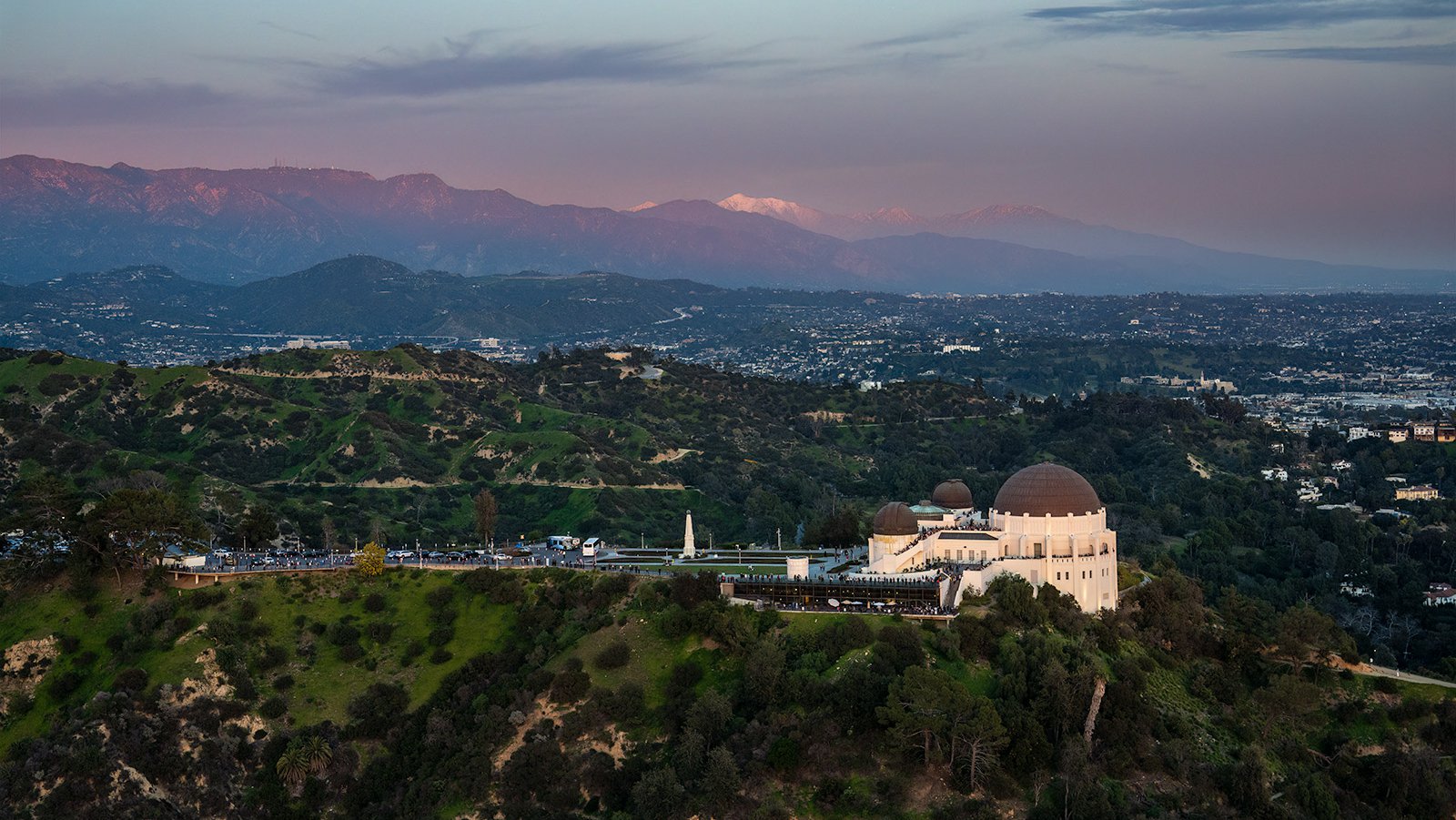
Griffith Observatory basking in the sunset light with the picturesque snow-capped peaks of the San Gabriel Mountains in the background.
What to See and Do at the Griffith Observatory
Griffith Observatory offers a diverse array of activities and exhibits that captivate visitors of all ages with the wonders of astronomy and space science. The rooftop terrace provides spectacular panoramic views of Downtown Los Angeles, the Pacific Ocean, and the iconic Hollywood Sign atop Mount Lee on clear days.
Inside, visitors can explore 60 interactive exhibits, including the Wilder Hall of the Eye, which showcases the evolution of astronomical instruments, and the Ahmanson Hall of the Sky, featuring displays about the Sun, Moon, and other celestial phenomena. The Gunther Depths of Space Hall houses 'The Big Picture,' the largest astronomically accurate image ever constructed, depicting the Virgo Cluster of galaxies in incredible detail. The Samuel Oschin Planetarium, equipped with a state-of-the-art Zeiss Mark IX Universarium projector, offers immersive shows covering a wide range of space science topics.
Among the observatory's notable exhibits are the Foucault Pendulum demonstrating Earth's rotation, a large Tesla coil producing impressive high-voltage electrical displays, and the Cosmic Connection gallery, which features nearly 2,200 pieces of celestial jewelry illustrating humanity’s deep connection to the cosmos. Space enthusiasts can also view a 4.5-billion-year-old iron meteorite and a piece of moon rock brought back by Apollo astronauts. The observatory hosts regular public star parties where local telescope groups share their instruments and expertise, providing visitors with unparalleled views of the night sky through free telescopes on the rooftop dome.
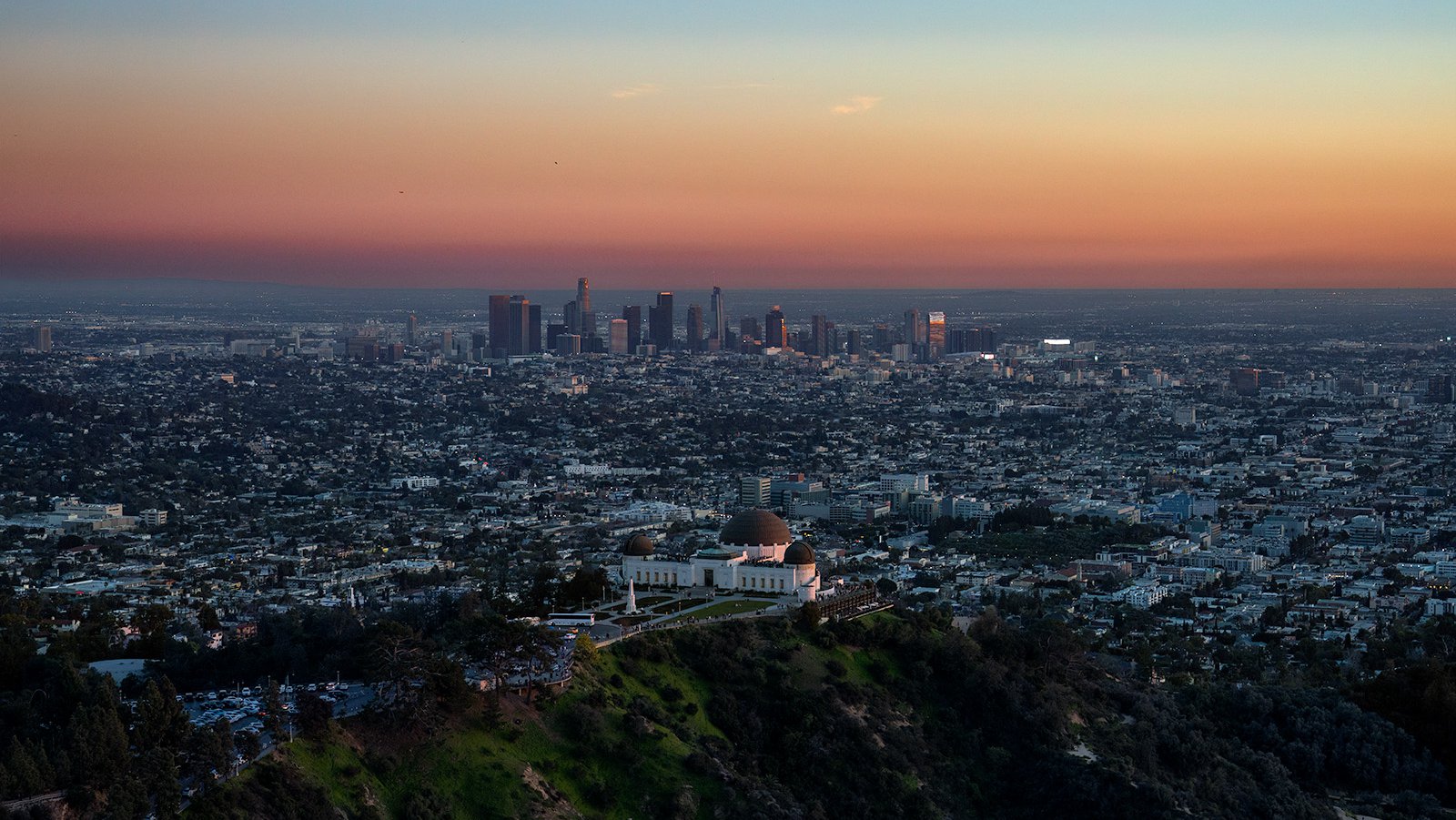
The iconic Griffith Observatory perched atop Mount Lee, offering a panoramic view of the sprawling city lights of Downtown Los Angeles at sunset.
When to Visit Griffith Observatory
The ideal time to visit Griffith Observatory is late afternoon to early evening, just before sunset. This timing allows visitors to enjoy stunning panoramic views of the Los Angeles skyline and the Hollywood Sign as the sun sets. Evening visits are perfect for attending popular planetarium shows like “All Space Considered,” which covers the most talked-about topics in astronomy. After the show, visitors can participate in the monthly Public Star Party or nightly telescope viewings, where knowledgeable operators guide guests through celestial sights. Planning your visit around these events ensures a memorable and educational experience at the observatory.
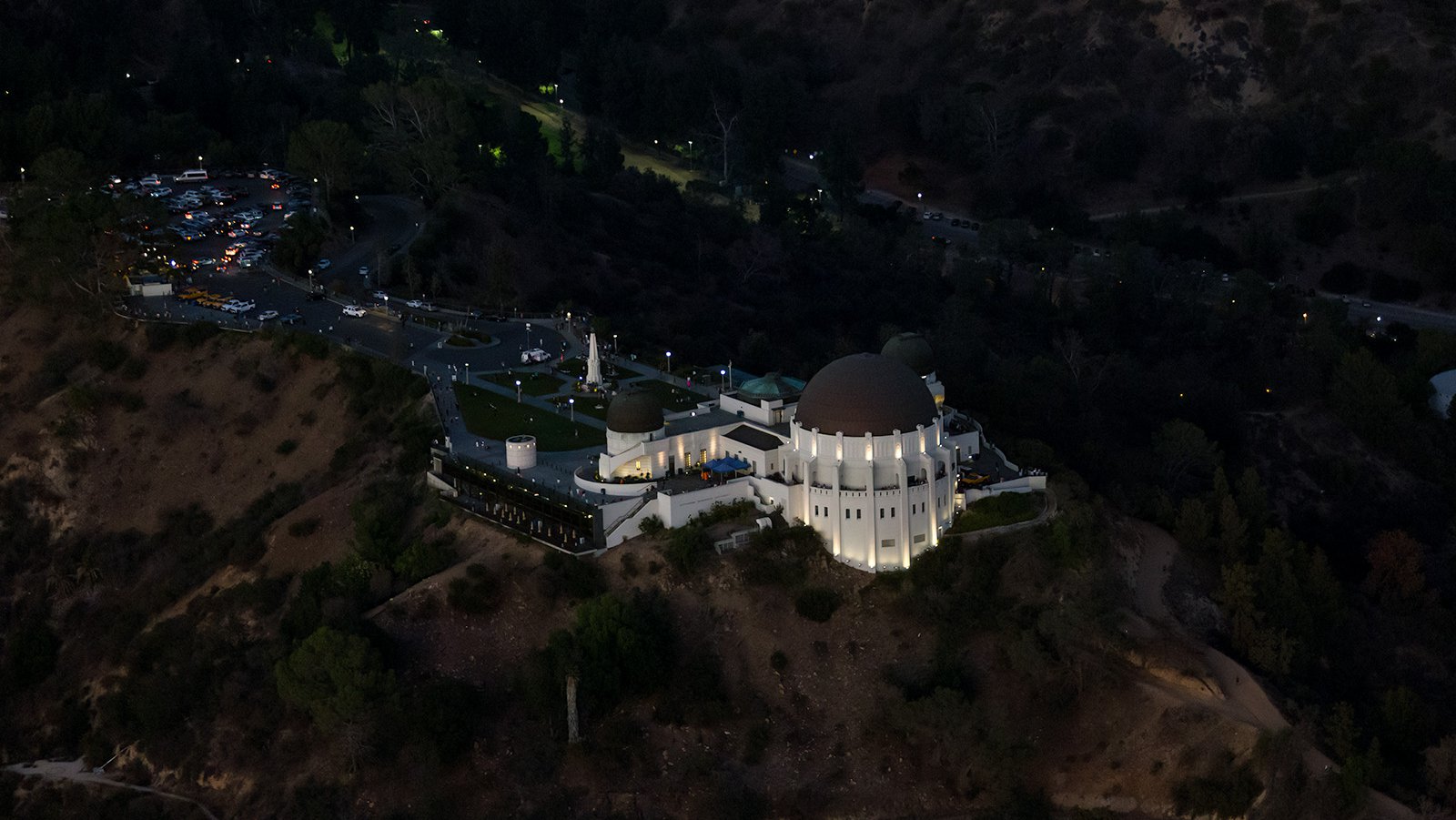
The Griffith Observatory sparkles with captivating elegance as its streamlined, art deco architecture is lit up by carefully placed accent lighting.
Griffith Observatory stands as a beacon of science and wonder in the heart of Los Angeles, offering visitors an unforgettable blend of spectacular views, cutting-edge exhibits, and engaging educational programs. Whether you're enjoying the panoramic vistas of the Los Angeles skyline and Hollywood Sign, exploring the expanded underground exhibit hall, or attending captivating planetarium shows at the Samuel Oschin Planetarium, the observatory makes astronomy accessible to all. With its rich history, iconic architecture, and a commitment to public astronomy, Griffith Observatory continues to inspire curiosity and awe, making it a must-visit destination for anyone eager to explore the cosmos and deepen their connection with the universe.