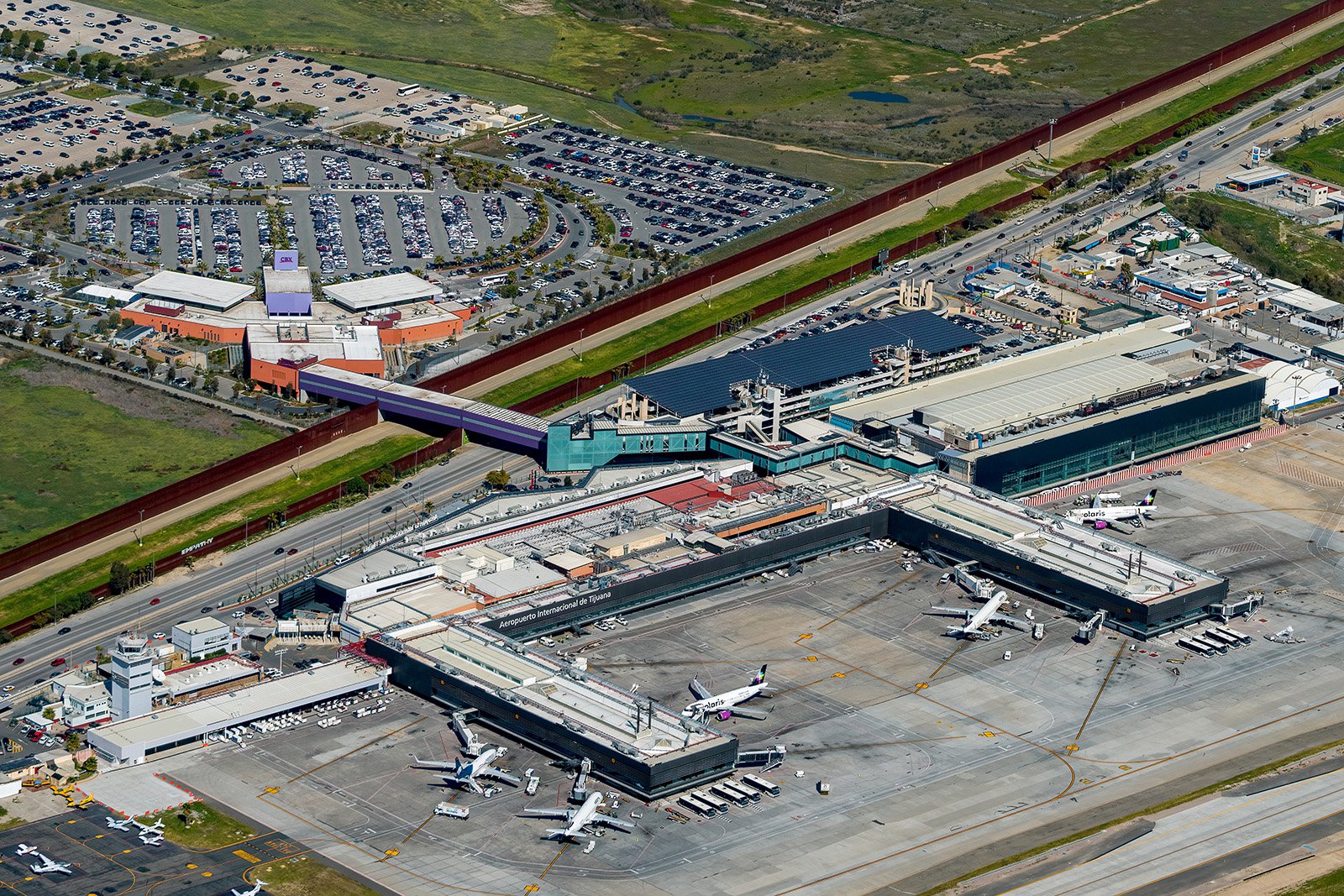
Tijuana International Airport (IATA code: TIJ), officially known as General Abelardo L. Rodriguez International Airport, is the main international gateway serving Tijuana, Baja California, and the surrounding San Diego metropolitan area. Strategically situated near the U.S.-Mexico border, it is the only geographically binational airport in the world, offering a unique direct connection to the United States via the Cross Border Xpress (CBX) terminal. As the fifth busiest airport in Mexico, TIJ facilitates tourism, trade, and business development, serving over 10 million passengers annually.
History and Development at TIJ Airport
Initially opened in 1951 as the “Aeropuerto Federal de Tijuana” to replace the former airport, Tijuana International Airport (TIJ) has continually evolved to meet growing air travel demand and increased tourism in Northern Mexico. Strategically located just south of the U.S.-Mexico border, TIJ is uniquely positioned as the only geographically binational airport in the world, with direct access to the United States via the Cross Border Xpress (CBX) terminal. Situated only one nautical mile south of Brown Field, a general aviation airport in San Diego, California, TIJ focuses on commercial operations and has undergone numerous renovations and expansions, including the addition of a new bus terminal to enhance transportation options. These developments support its role as a major gateway serving both domestic and international travelers, making it a vital hub for tourism, trade, and business in the region.
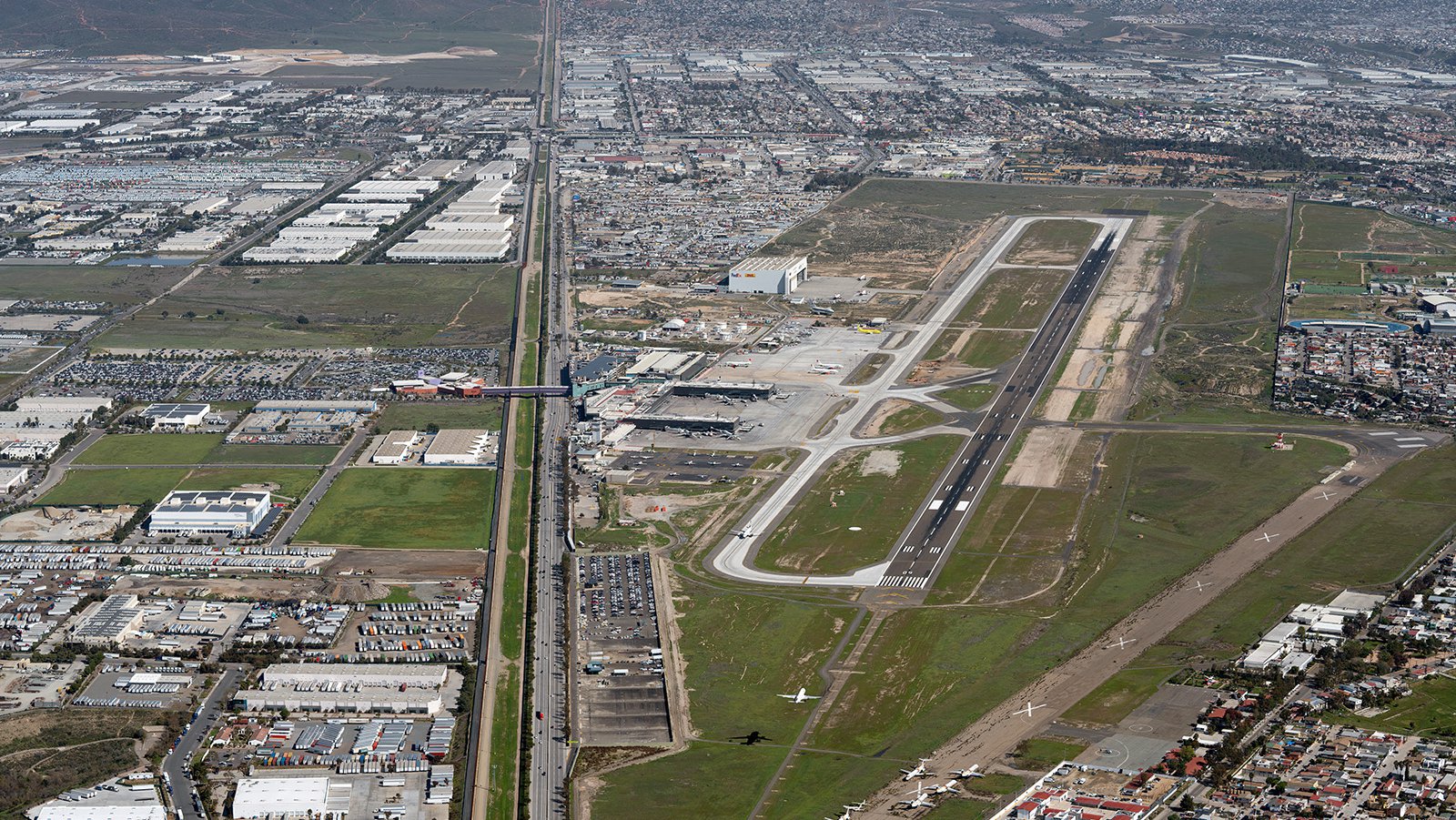
Wide oblique aerial view of Tijuana International Airport (TIJ), showcasing its extensive runway, main terminal buildings, and the distinctive purple Cross Border Xpress skybridge connecting the airport directly to the United States across the border.
Tijuana Airport Development Plans
Currently managed by Grupo Aeroportuario del Pacífico (GAP), which operates 11 airports across Mexico and Latin America, Tijuana Airport has experienced significant renovations, including new terminal buildings, runway expansions, and the addition of an international bridge connecting the airport to a U.S. check-in and processing facility. To accommodate larger aircraft and increased passenger traffic, GAP plans further development such as expanding parking facilities, enhancing retail and dining options throughout both terminals, and increasing customer service staff. Additionally, the airport aims to maximize its growing capacity by establishing new cargo routes to neighboring countries like Guatemala and El Salvador, reinforcing its strategic location as a key transportation hub in the region.
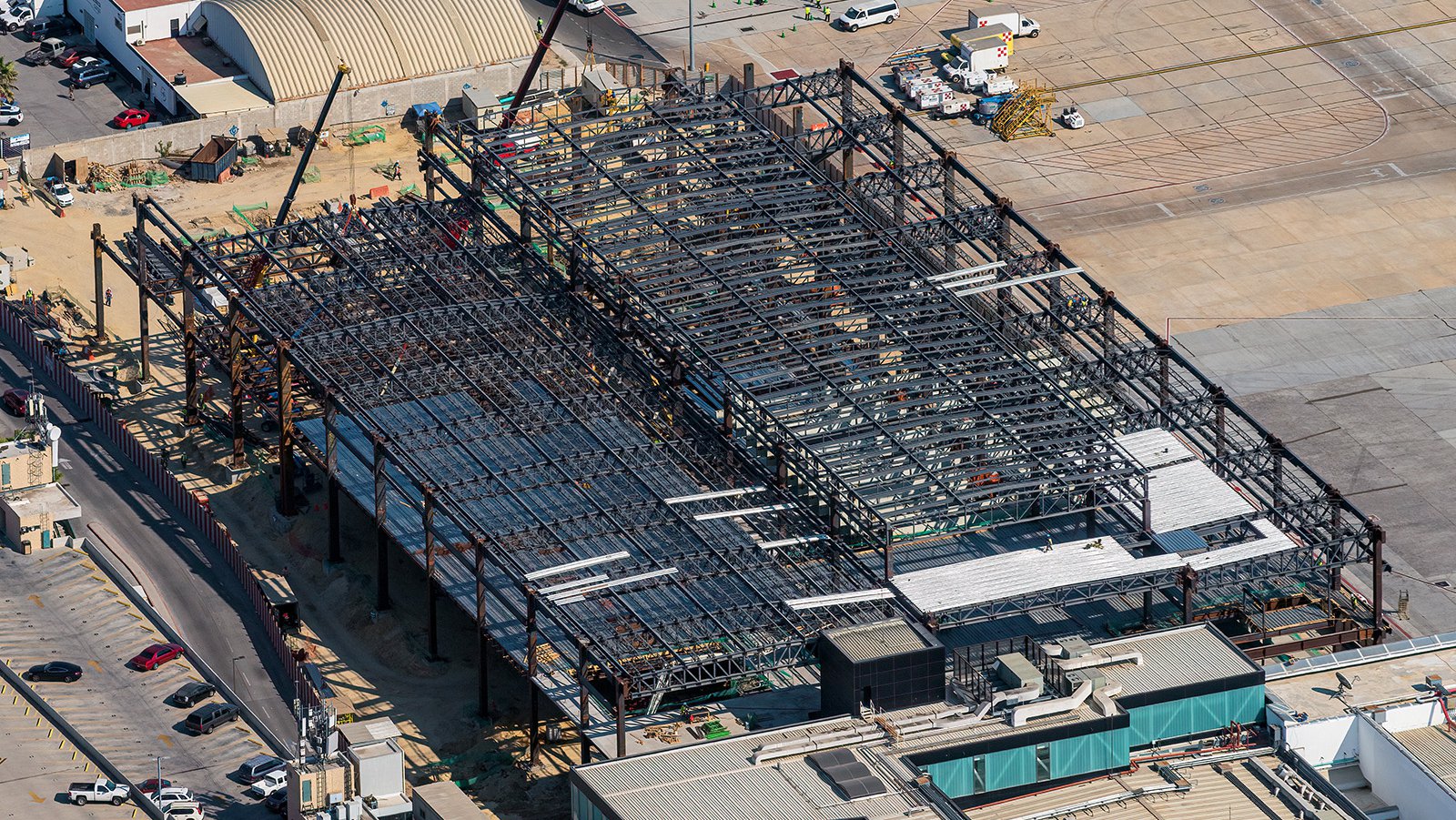
Close-up aerial photo highlighting the intricate steel framing of the New Processing Building at Tijuana International Airport, showcasing towering beams and crisscrossing girders that form the structural backbone of this major airport expansion.
Nuevo Edificio Procesador
Completed in 2022, the Nuevo Edificio Procesador (New Processing Building) at Tijuana International Airport significantly enhances the travel experience by providing additional check-in counters, security lanes, immigration facilities, and boarding gates. This modern terminal streamlines passenger flow, particularly benefiting international flights from Asia and South America, as well as travelers using the Cross Border Xpress (CBX) to and from the United States. Equipped with advanced customs facilities and designed for efficiency, the Nuevo Edificio Procesador supports the airport’s growing capacity and commitment to seamless border-crossing and superior airport features.
Cross Border Xpress (CBX)
The Cross Border Xpress (CBX) bridge at Tijuana Airport is a groundbreaking international pedestrian bridge that directly connects TIJ Airport in Mexico with San Diego, California. This unique facility offers travelers a fast and convenient way to cross the U.S.-Mexico border, eliminating the need for additional immigration and customs checks by consolidating these procedures at the San Diego terminal. As the world's only binational airport terminal, CBX streamlines the travel experience, enabling passengers to seamlessly move between the two countries with ease and efficiency.
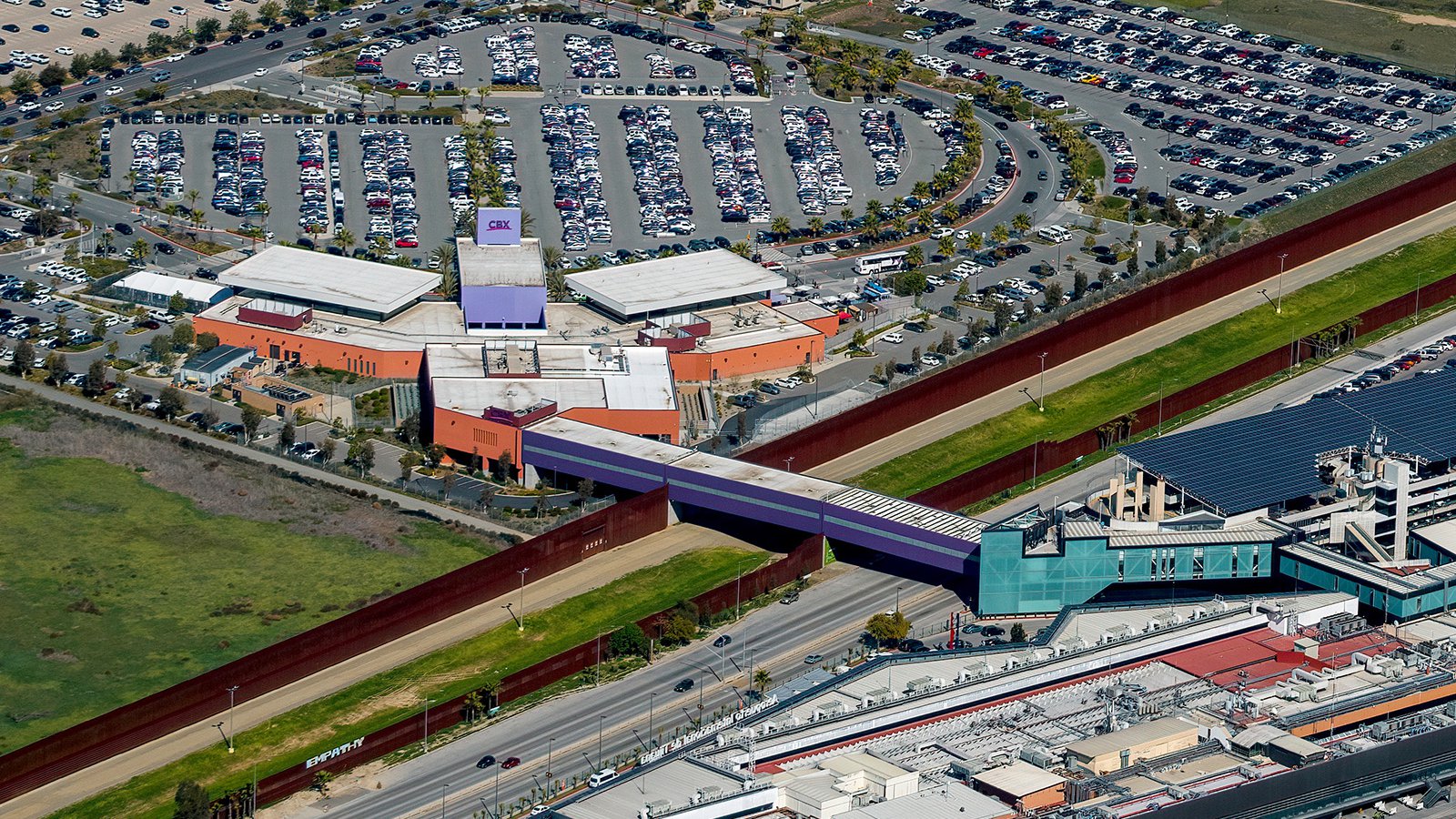
An aerial view of the Cross Border Xpress at Tijuana International Airport in Mexico offers a glimpse of this unique bridge-like structure, which allows travelers to cross the U.S.-Mexico border quickly and conveniently via an airside pedestrian skywalk suspended high above the international border.
Airlines, Destinations, and Air Services at TIJ
Tijuana International Airport serves an extensive network of 42 domestic destinations across Mexico, including major cities such as Mexico City, Guadalajara, Monterrey, and Cancun, as well as several international locations. The airport is a hub for Volaris and a focus city for Viva Aerobus, with other prominent airlines operating here including Aeromexico, Interjet, and American Airlines. In addition to passenger flights, TIJ supports cargo services with regular routes between the United States and Latin America.
Strategically located just 15 miles from Downtown San Diego, Tijuana Airport offers a convenient alternative for travelers in the San Diego metropolitan area. It provides nonstop connections throughout Mexico and connecting flights to the United States, Latin America, Europe, and Asia. The airport also houses facilities for the Mexican Air Force and supports tourism, flight training, and general aviation activities, making it a vital regional transportation hub.
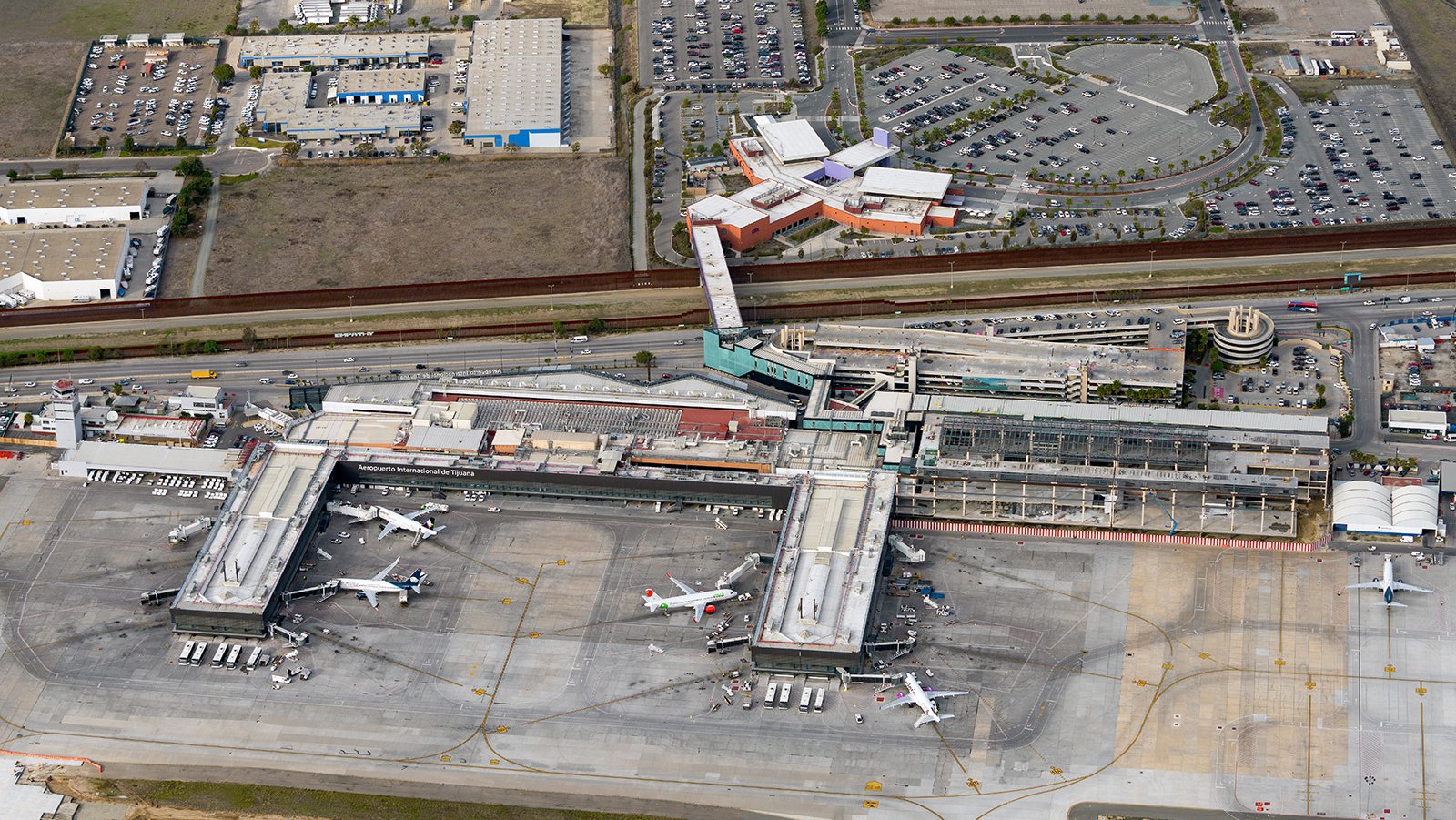
An aerial view of Tijuana Airport reveals an array of airplanes parked at their gates, awaiting passengers to begin their travel both domestically and internationally.
Aerial Photography to Document TIJ Construction
Using aerial photography to document large-scale construction projects at Tijuana International Airport offers significant advantages for airport developers. This method provides precise, real-time data on the progress of development, enabling swift, informed decision-making. Aerial imagery also allows for detailed site analysis without the need for physical presence in restricted or active construction zones, minimizing disruptions to airport operations. Especially at busy airports like TIJ, this approach ensures safety, efficiency, and comprehensive monitoring throughout the construction process.
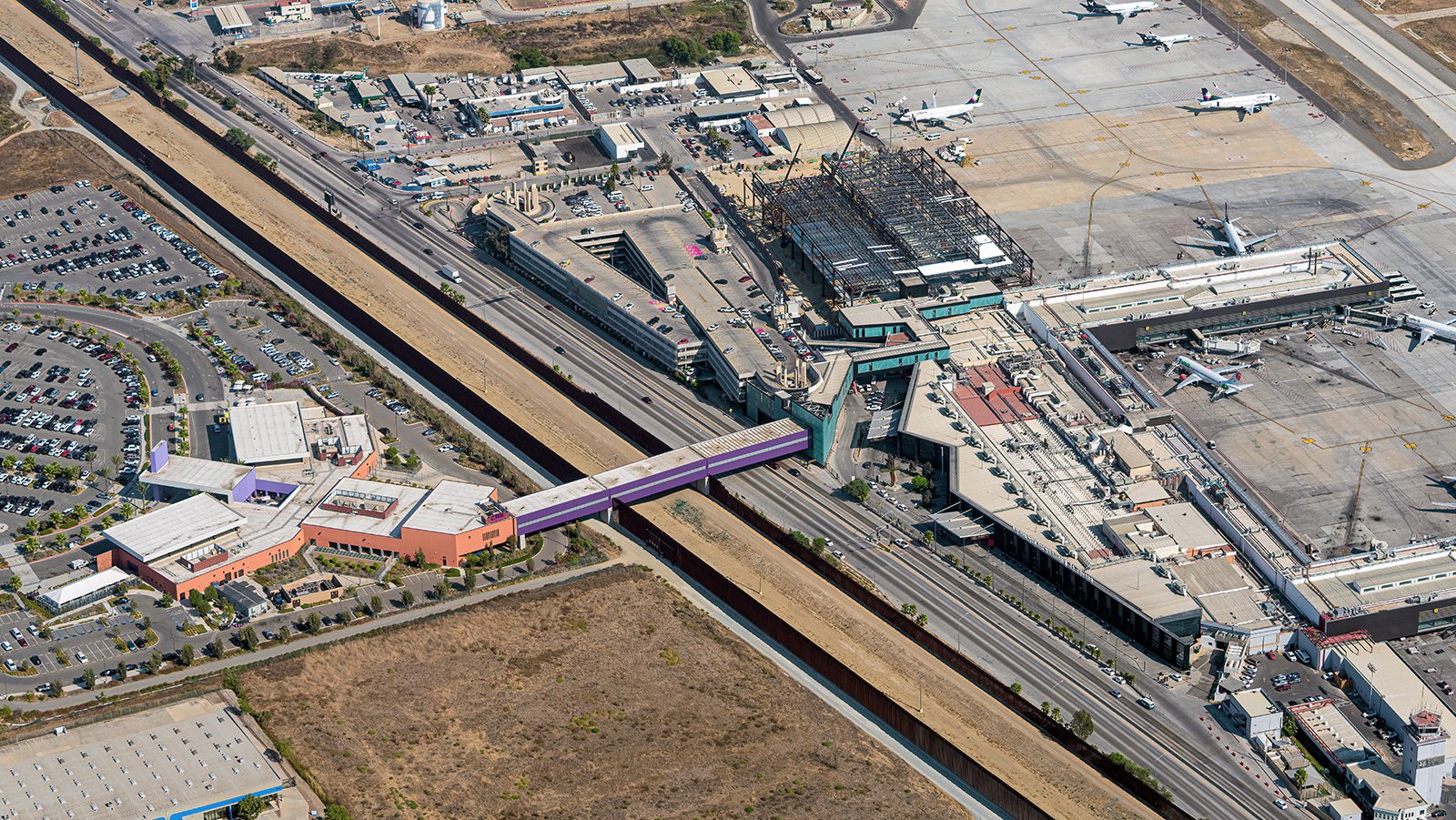
Aerial view of the purple Cross Border Xpress skybridge linking the United States to Tijuana International Airport, alongside the under-construction Nuevo Edificio Procesador, highlighting TIJ's commitment to efficient, binational travel and modern airport expansion.
With its prime location close to the U.S.-Mexico border, modern facilities, helpful customer service, ample parking options, and expansive future development plans, Tijuana airport is poised for continued success moving forward. GAPs vision will have a lasting impact for both Tijuana and San Diego area. By using aerial photography throughout its development process, the TIJ's contractors have had access to valuable information that allowed them to understand exactly how their work progressed over time, while also giving them insights into potential areas where construction improvements could be made in order to save both time and money. Looking forward to visiting TIJ soon!
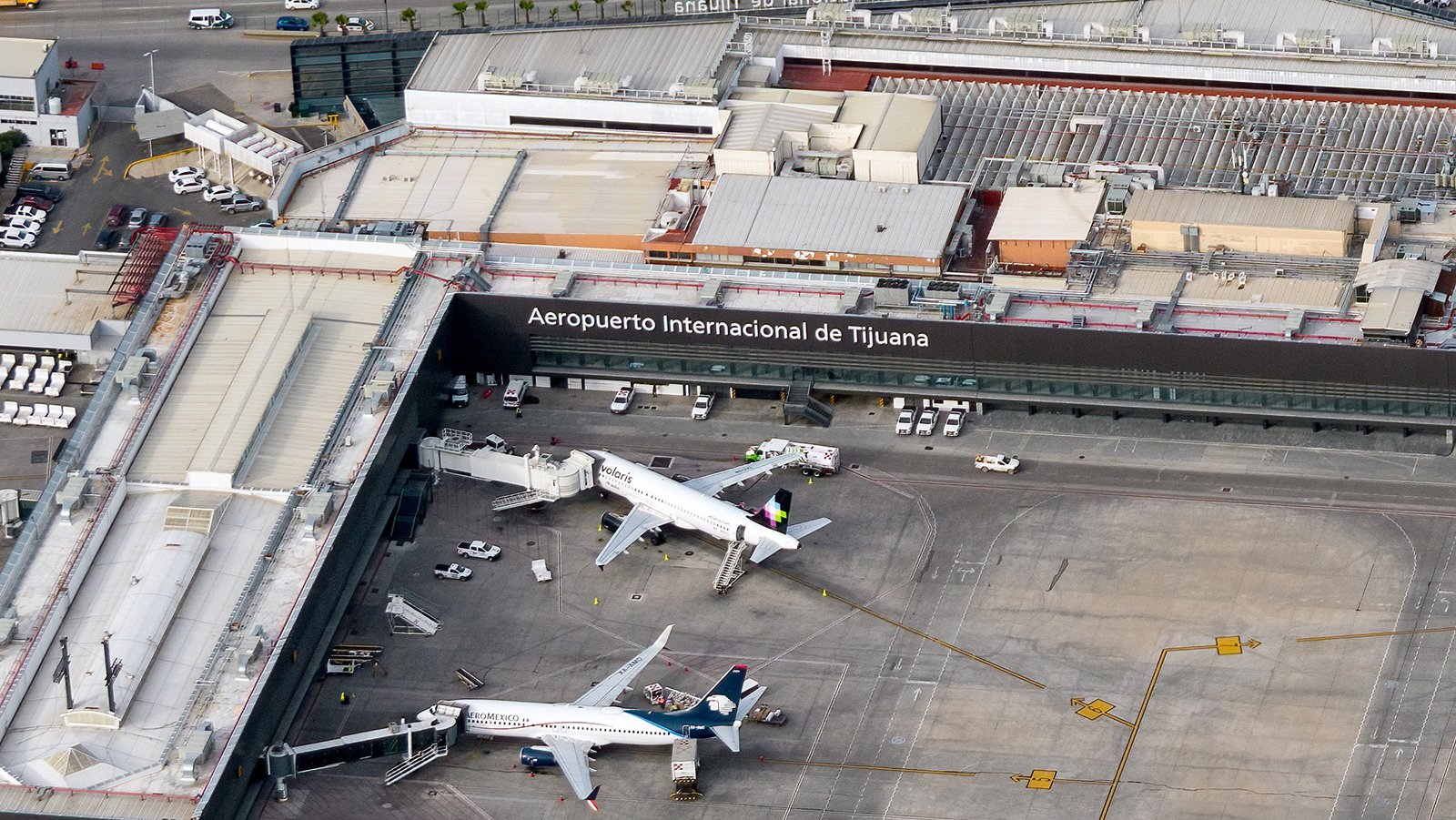
A sweeping aerial view of Tijuana International Airport (TIJ) showcases the iconic "Aeropuerto Internacional de Tijuana" sign amid busy gates filled with aircraft, passengers, and airport staff, highlighting the vibrant activity at this major binational travel hub.